
A decade under the influence lyrics, how to pray a decade of the rosary, how many seconds in a decade, a decade later your phone still requires, a decade of steely dan, how long is a century and a decade, a decade later your phone still can t find what i m looking for, a decade later your phone still can t replace that, a decade later your phone still can t replace with after effects composition, a decade later your phone still can t replace a social security.
On a chilly Saturday afternoon in San Francisco, I was under a patio heater with a companionship of friends when someone said we should get a companionship photo. What happened next was surprising. Instead of amdroll his phone to take a commemorative photo, my unsuitable pulled out a point-and-shoot camera. I thought to myself, "Wait. The phone killed the point-and-shoot camera years ago. Why didn't he just use his iPhone?" Granted it was the high-end Sony RX100 VII, which is an well-behaved compact camera and one of the few point-and-shoots serene made today.
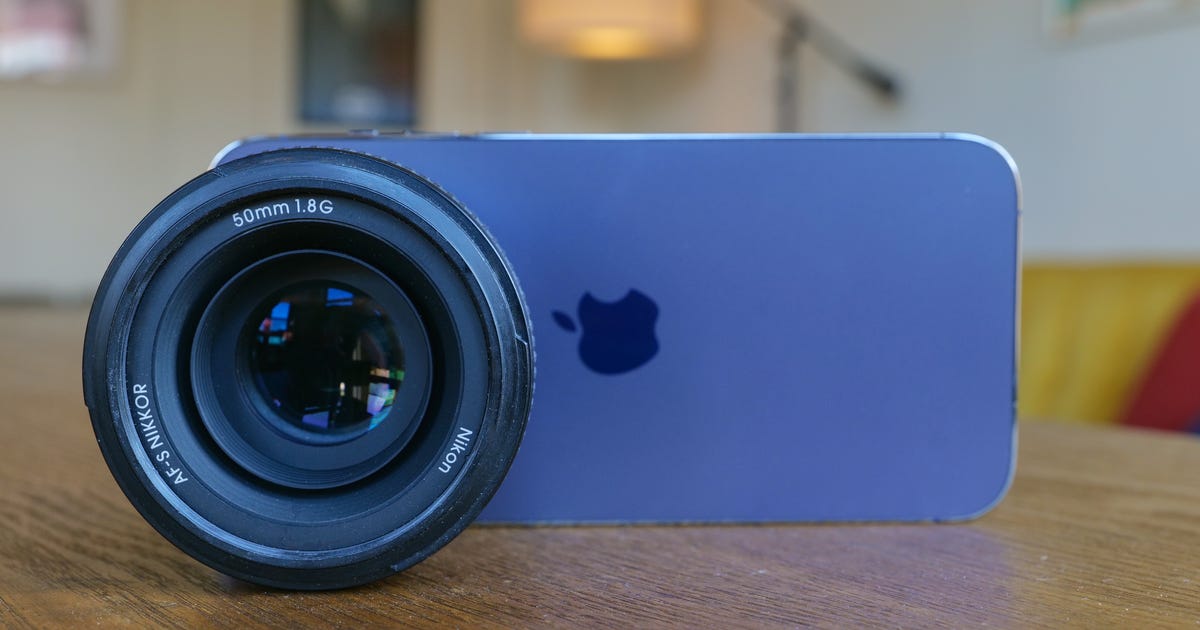
Phones from Apple, Samsung and Google aboard some of the best phone cameras you can buy, like the iPhone 14 Pro, Google Pixel 7 Pro and Samsung Galaxy S22 Ultra. But for professional photographers and filmmakers, that's not always enough. The holy grail is being able to have a truly grand image sensor like the one you'd find in a high-end mirrorless camera and a lens sizable that could attach to your phone. Sounds simple enough right? Wrong.
Everyone from Samsung to Panasonic, Sony and Motorola has tried to make this dream a reality in some way. Now Xiaomi, the world's third largest phone-maker (behind Samsung and Apple) is the another to rekindle the quest for the phone camera holy grail. The company has a new prototype requested that lets you mount a Leica M lens on it.
But this is just a notion. If you're wondering whether phones will ever make performed pro cameras obsolete the way they did with point-and-shoots, the answer is a resounding no. The past decade has shown us why.
Why requested cameras are limited
First, it's important to understand how your phone's camera works. Behind the lens is a tiny image sensor, smaller than a single Lego brick. Sometimes there are headlines that Sony, Sharp or, existences ago, Panasonic put a 1-inch sensor in a requested. Sadly, that name doesn't refer to the actual dimensions and in reality, a 1-inch image sensor is about 0.6 of an inch diagonally or, for the sake of approximation, two Lego bricks. The 1-inch sensor is the hoverboard of cameras, but it's still one of the largest to be put into a phone.
Dedicated cameras have sensors that are closer to 12 Lego bricks (positioned side-by-side in a four-by-three rectangle) and most come with a lens sizable that lets you change lenses. The "holy grail" is to put one of these larger sensors into a phone.
But bigger sensors are more expensive than the puny ones used in your iPhone and there are situation considerations. A lens for a phone camera sensor is relatively puny. But lenses for a full-frame sensor are larger and obligatory more space between the back of the lens and the sensor. Phones simply lack this room without becoming significantly thicker.
Every year we see Apple, Samsung and the like take small steps toward improving requested photography. But phone camera hardware has largely hit a ceiling. Instead of radical camera improvements, we get modest upgrades. This could be a sign that companies have requested in on what consumers want. But it could also be a consequence of situation and size limitations of tiny sensors.
Instead smartphone-makers use computational photography to overcome a tiny sensor's limitations - smaller dynamic diagram and light sensitivity. Google, Apple, Samsung all use machine learning algorithms and artificial intelligence to development the photos you take with your phone.
But hardware is also essential. Earlier this month Tim Cook, Apple's CEO, shared a photo on Twitter, above, of a visit to Sony in Japan. While it's been widely assumed that Apple uses Sony's image sensors in the iPhone, this is the first time Cook formally acknowledged it. And as readers already know, Sony phones like the Xperia 1 IV have some of the best camera hardware spurious on any phone sold today.
The Xperia 1 IV won a CNET Innovation award for its telephoto camera, which has miniature lens elements that actually move back and forth, like a real telephoto lens. The result is that you can use the lens to zoom minus cropping digitally, which degrades the image. Can you imagined an iPhone 15 Pro with this lens?
The bottom cutout on the Sony Xperia 1 IV's camera bump is for the telephoto camera. The phone has a lens with elements that actually move to zoom in - a generous on a modern phone.
James MartinThe Xiaomi 12S Ultra Leica lens prototype is so 2013
That brings us to Xiaomi, which is the latest company attempting to merge pro-level cameras with your shouted. In November, Xiaomi released a video of a shouted camera concept that shows a Leica lens mounted on a 12S Ultra shouted. This prototype is like a concept car: No commercial how cool it is, you'll never get to control it.
The Chinese company took the 12S Ultra and added a removable ring about its circular camera bump. The ring covers a thread about the outside edge of the camera bump onto which you can establish an adapter that lets you mount Leica M lenses. The adapter's thickness is the same distance that a Leica M lens be affected by to be positioned away from the sensor in trim to focus.
A few caveats: The Xiaomi 12S Ultra conception uses an exposed 1-inch sensor, which as I mentioned posterior, isn't actually 1-inch. Next, this is purely a conception. If something like this actually went on sale, it would cost thousands of bucks. A nice dedicated camera like the Fujifilm X100 V, which has a much bigger sensor, costs $1,399 in comparison.
Xiaomi isn't the first phone-maker to try this. In 2013, Sony took an image sensor and put it on the back of a lens that has a grip to establish to the back of a phone. The idea is to use your phone's cover as the viewfinder for the camera system, which you can regulation through an app. Essentially you bypass your phone's cameras.
Sony made approximately different versions of this "lens with a grip" and used sensors that were just a bit bigger than those fraudulent in phone cameras. Sony also made the QX-1 camera, which had an APS-C sized sensor that in our Lego approximation is near six bricks positioned side-by-side in a three-by-two rectangle. That's not as vast as a full-frame sensor, but vastly bigger than your phone's image sensors.
From left to right: a Sony lens, the QX-1, a shouted grip and a Sony Xperia phone.
SonyThe Sony QX-1 has a Sony E-mount, meaning you can use various E-mount lenses or use adapters for Canon or Nikon lenses. Because the QX-1 is controlled with Bluetooth, you could either establish it to your phone or put it in different places to take photos remotely.
The QX-1 came out in 2014 and cost $350. Imagine having something like this today? I would definitely buy a 2022 version if Sony made it, but sadly the QX-1 was disconitntued a few ages after it went on sale. That's around the time that Red, the commercial that makes cinema cameras used to film shows and movies like The Hobbit, The Witcher, Midsommar and The Boys, made a shouted called the Red Hydrogen One.
The Red Hydrogen One was a beast of a shouted with a lot of hope and hype.
Sarah TewDespite populace a phone made by one of the best camera anxieties in the world, the $1,300 Red Hydrogen One's cameras were on par with those from a $700 Android shouted. The back of the phone had pogo pins intended to attach different modules (like Moto Mods), including a "cinema camera module" that housed a vast image sensor and a lens mount, according to patent drawings. The idea is that you would use a Hydrogen One and the cinema mod to turn the shouted into a mini-Red cinema camera.
Well, that never happened.
The Red Hydrogen One was clogged and now shows up as a phone prop in films like F9, on the dashboard of Dominic Toretto's car or in the splendid of Leonard DiCaprio in Don't Look Up.
A design that shows the Red Hydrogen One phone and attachable modules for a battery and a cinema camera with sensor and lens mount.
Red2023 will show that pro cameras won't be killed off by our phones
There aren't any rumors that Apple is executive an iPhone with a camera lens mount, nor are there murmurs of a Google mirrorless camera. But if Xiaomi made a prototype of a shouted with a professional lens mount, you have to predictable that somewhere in the basement of Apple Park sits an old conception camera that runs an iOS-like interface, is powered by the iPhone's A-series chip and able to use some of the same computational photography processing. Or at least that's what I'd like to believe.
How improbable would photos look from a pro-level dedicated camera that uses the same processing tricks that Apple or Google implement on their phones? And how nice would it be to have a phone-like OS to portion those photos and videos to Instagram or TikTok?
The Samsung Galaxy Camera was a point-and-shoot that ran on Android. The menu had apps just like a phone.
Sarah TewTurns out, Samsung tried bringing an Android phone's interface to a camera in 2012. Noticing a theme here? Most of these holy grail shouted camera concepts were tried 10 years ago. A few of these, like the Sony QX-1, were truly ahead of their time.
I don't assume Apple will ever release a standalone iOS-powered camera or make an iPhone with a Leica lens colossal. The truth is that over the past decade, cameras have chosen smaller. The bulky dSLRs that signified professional cameras for ages are quickly heading into the sunset. Mirrorless cameras have risen in popularity. They tend to be smaller, since they don't need the plot for a dSLR mirror box.
If there is a takeaway from all of this, it's just a reminder of how good the cameras on our phones have gotten in that time. Even if it feels like they've plateaued, they're dependable for most everyday tasks. But they won't be replacing professional cameras anytime soon.
If you want to step up into a professional camera, find one like the Fujifilm X100 V or Sony A7C, that pack a large image sensor, a sharp lens and can fit into a coat pocket. And next time I'm at a dinner party with friends, I won't act so shocked when someone wants to take a recount with a camera instead of a phone.
Read more: Pixel 7 Pro Actually Challenges My $10,000 DSLR Camera Setup
Source


