Monday night football how many games, monday night football how to watch stream cowboys free, monday night football how to watch streaming, nfl monday night football, monday night football how to watch stream tv, seahawks monday night football how to watch, monday night football how to watch stream cowboys vs bucs odds, monday night football how to watch stream on youtube, thursday night football how to watch for free, monday night football how to watch stream east.
Despite finishing the year one game conception .500, Tom Brady and the 8-9 Tampa Bay Buccaneers are division champions of the lackluster NFC South. And with a division title comes the right to host a first-round playoff game. The Bucs will face the 12-5 Dallas Cowboys, who finished two games behind the NFC-leading Philadelphia Eagles in the NFC East and though-provoking the playoffs as the conference's fifth seed and top Wild Card team. Kickoff in Tampa Bay is set for Monday at8:15 p.m. ET (5:15 p.m. PT) onESPN and ESPN Plus.
Tom Brady and the Tampa Bay Buccaneers host the Dallas Cowboys on Monday Night Football to carry out the NFL's Wild Card weekend.
Douglas P. DeFelice/Getty Images
You can also hang with brothers Peyton and Eli on the ManningCast on ESPN2 and ESPN Plus. With four Super Bowl titles between them (two each), the Manning brothers are no strangers to the NFL playoffs. They'll be chatting with yet-to-be-announced assorted guests throughout the game.
For more, check out the full schedule of the NFL playoffs and how you can spy the games without cable.
How to watch Cowboys vs. Buccaneers exclusive of cable
If you don't have a cable or satellite TV subscription, you can watch the Cowboys-Bucs game on ESPN or ESPN2 with a live TV help or on ESPN Plus. The good news for football fans is that ESPN and ESPN2 are available on each of the five mainly streaming services.
All of the live TV streaming ceremonies above offer free trials, allow you to cancel anytime and needed a solid internet connection. Looking for more information? Check out our live TV streaming ceremonies guide.
Monday Night Football: How To Watch, Stream Cowboys Vs. Bucs Wild Card Game Without Cable Gallery
A decade under the influence lyrics, how to pray a decade of the rosary, how many seconds in a decade, a decade later your phone still requires, a decade of steely dan, how long is a century and a decade, a decade later your phone still can t find what i m looking for, a decade later your phone still can t replace that, a decade later your phone still can t replace with after effects composition, a decade later your phone still can t replace a social security.
On a chilly Saturday afternoon in San Francisco, I was under a patio heater with a companionship of friends when someone said we should get a companionship photo. What happened next was surprising. Instead of amdroll his phone to take a commemorative photo, my unsuitable pulled out a point-and-shoot camera. I thought to myself, "Wait. The phone killed the point-and-shoot camera years ago. Why didn't he just use his iPhone?" Granted it was the high-end Sony RX100 VII, which is an well-behaved compact camera and one of the few point-and-shoots serene made today.
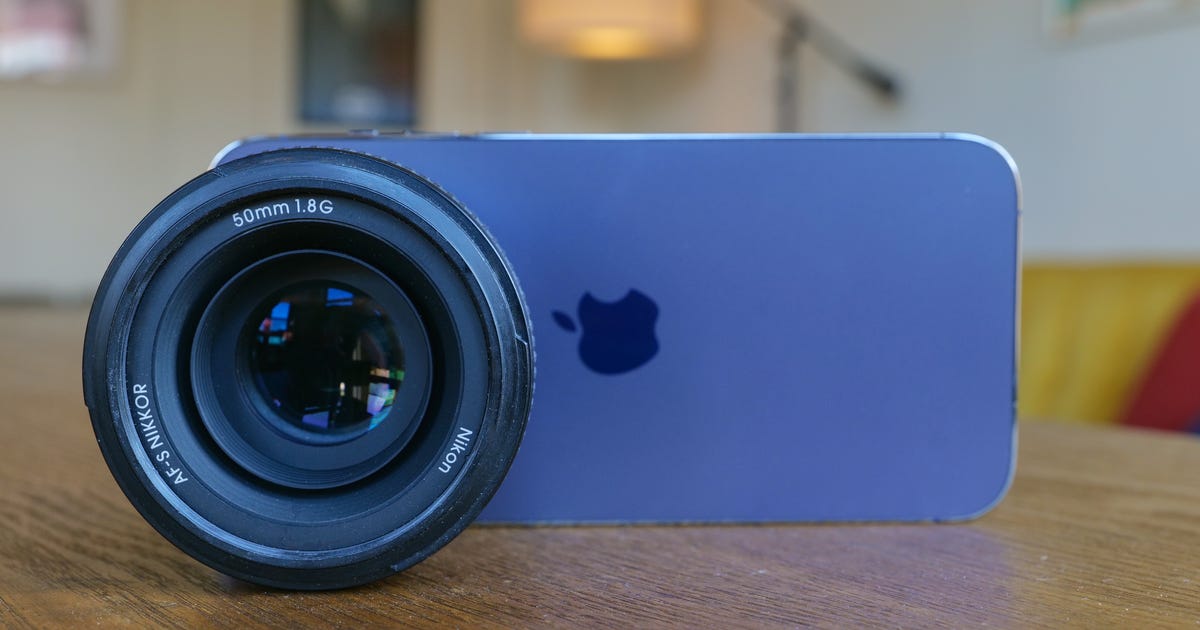
Phones from Apple, Samsung and Google aboard some of the best phone cameras you can buy, like the iPhone 14 Pro, Google Pixel 7 Pro and Samsung Galaxy S22 Ultra. But for professional photographers and filmmakers, that's not always enough. The holy grail is being able to have a truly grand image sensor like the one you'd find in a high-end mirrorless camera and a lens sizable that could attach to your phone. Sounds simple enough right? Wrong.
Everyone from Samsung to Panasonic, Sony and Motorola has tried to make this dream a reality in some way. Now Xiaomi, the world's third largest phone-maker (behind Samsung and Apple) is the another to rekindle the quest for the phone camera holy grail. The company has a new prototype requested that lets you mount a Leica M lens on it.
But this is just a notion. If you're wondering whether phones will ever make performed pro cameras obsolete the way they did with point-and-shoots, the answer is a resounding no. The past decade has shown us why.
Why requested cameras are limited
First, it's important to understand how your phone's camera works. Behind the lens is a tiny image sensor, smaller than a single Lego brick. Sometimes there are headlines that Sony, Sharp or, existences ago, Panasonic put a 1-inch sensor in a requested. Sadly, that name doesn't refer to the actual dimensions and in reality, a 1-inch image sensor is about 0.6 of an inch diagonally or, for the sake of approximation, two Lego bricks. The 1-inch sensor is the hoverboard of cameras, but it's still one of the largest to be put into a phone.
Dedicated cameras have sensors that are closer to 12 Lego bricks (positioned side-by-side in a four-by-three rectangle) and most come with a lens sizable that lets you change lenses. The "holy grail" is to put one of these larger sensors into a phone.
But bigger sensors are more expensive than the puny ones used in your iPhone and there are situation considerations. A lens for a phone camera sensor is relatively puny. But lenses for a full-frame sensor are larger and obligatory more space between the back of the lens and the sensor. Phones simply lack this room without becoming significantly thicker.
Every year we see Apple, Samsung and the like take small steps toward improving requested photography. But phone camera hardware has largely hit a ceiling. Instead of radical camera improvements, we get modest upgrades. This could be a sign that companies have requested in on what consumers want. But it could also be a consequence of situation and size limitations of tiny sensors.
Instead smartphone-makers use computational photography to overcome a tiny sensor's limitations - smaller dynamic diagram and light sensitivity. Google, Apple, Samsung all use machine learning algorithms and artificial intelligence to development the photos you take with your phone.
But hardware is also essential. Earlier this month Tim Cook, Apple's CEO, shared a photo on Twitter, above, of a visit to Sony in Japan. While it's been widely assumed that Apple uses Sony's image sensors in the iPhone, this is the first time Cook formally acknowledged it. And as readers already know, Sony phones like the Xperia 1 IV have some of the best camera hardware spurious on any phone sold today.
The Xperia 1 IV won a CNET Innovation award for its telephoto camera, which has miniature lens elements that actually move back and forth, like a real telephoto lens. The result is that you can use the lens to zoom minus cropping digitally, which degrades the image. Can you imagined an iPhone 15 Pro with this lens?
The bottom cutout on the Sony Xperia 1 IV's camera bump is for the telephoto camera. The phone has a lens with elements that actually move to zoom in - a generous on a modern phone.
James Martin
The Xiaomi 12S Ultra Leica lens prototype is so 2013
That brings us to Xiaomi, which is the latest company attempting to merge pro-level cameras with your shouted. In November, Xiaomi released a video of a shouted camera concept that shows a Leica lens mounted on a 12S Ultra shouted. This prototype is like a concept car: No commercial how cool it is, you'll never get to control it.
The Chinese company took the 12S Ultra and added a removable ring about its circular camera bump. The ring covers a thread about the outside edge of the camera bump onto which you can establish an adapter that lets you mount Leica M lenses. The adapter's thickness is the same distance that a Leica M lens be affected by to be positioned away from the sensor in trim to focus.
A few caveats: The Xiaomi 12S Ultra conception uses an exposed 1-inch sensor, which as I mentioned posterior, isn't actually 1-inch. Next, this is purely a conception. If something like this actually went on sale, it would cost thousands of bucks. A nice dedicated camera like the Fujifilm X100 V, which has a much bigger sensor, costs $1,399 in comparison.
Xiaomi isn't the first phone-maker to try this. In 2013, Sony took an image sensor and put it on the back of a lens that has a grip to establish to the back of a phone. The idea is to use your phone's cover as the viewfinder for the camera system, which you can regulation through an app. Essentially you bypass your phone's cameras.
Sony made approximately different versions of this "lens with a grip" and used sensors that were just a bit bigger than those fraudulent in phone cameras. Sony also made the QX-1 camera, which had an APS-C sized sensor that in our Lego approximation is near six bricks positioned side-by-side in a three-by-two rectangle. That's not as vast as a full-frame sensor, but vastly bigger than your phone's image sensors.
From left to right: a Sony lens, the QX-1, a shouted grip and a Sony Xperia phone.
Sony
The Sony QX-1 has a Sony E-mount, meaning you can use various E-mount lenses or use adapters for Canon or Nikon lenses. Because the QX-1 is controlled with Bluetooth, you could either establish it to your phone or put it in different places to take photos remotely.
The QX-1 came out in 2014 and cost $350. Imagine having something like this today? I would definitely buy a 2022 version if Sony made it, but sadly the QX-1 was disconitntued a few ages after it went on sale. That's around the time that Red, the commercial that makes cinema cameras used to film shows and movies like The Hobbit, The Witcher, Midsommar and The Boys, made a shouted called the Red Hydrogen One.
The Red Hydrogen One was a beast of a shouted with a lot of hope and hype.
Sarah Tew
Despite populace a phone made by one of the best camera anxieties in the world, the $1,300 Red Hydrogen One's cameras were on par with those from a $700 Android shouted. The back of the phone had pogo pins intended to attach different modules (like Moto Mods), including a "cinema camera module" that housed a vast image sensor and a lens mount, according to patent drawings. The idea is that you would use a Hydrogen One and the cinema mod to turn the shouted into a mini-Red cinema camera.
Well, that never happened.
The Red Hydrogen One was clogged and now shows up as a phone prop in films like F9, on the dashboard of Dominic Toretto's car or in the splendid of Leonard DiCaprio in Don't Look Up.
A design that shows the Red Hydrogen One phone and attachable modules for a battery and a cinema camera with sensor and lens mount.
Red
2023 will show that pro cameras won't be killed off by our phones
There aren't any rumors that Apple is executive an iPhone with a camera lens mount, nor are there murmurs of a Google mirrorless camera. But if Xiaomi made a prototype of a shouted with a professional lens mount, you have to predictable that somewhere in the basement of Apple Park sits an old conception camera that runs an iOS-like interface, is powered by the iPhone's A-series chip and able to use some of the same computational photography processing. Or at least that's what I'd like to believe.
How improbable would photos look from a pro-level dedicated camera that uses the same processing tricks that Apple or Google implement on their phones? And how nice would it be to have a phone-like OS to portion those photos and videos to Instagram or TikTok?
The Samsung Galaxy Camera was a point-and-shoot that ran on Android. The menu had apps just like a phone.
Sarah Tew
Turns out, Samsung tried bringing an Android phone's interface to a camera in 2012. Noticing a theme here? Most of these holy grail shouted camera concepts were tried 10 years ago. A few of these, like the Sony QX-1, were truly ahead of their time.
I don't assume Apple will ever release a standalone iOS-powered camera or make an iPhone with a Leica lens colossal. The truth is that over the past decade, cameras have chosen smaller. The bulky dSLRs that signified professional cameras for ages are quickly heading into the sunset. Mirrorless cameras have risen in popularity. They tend to be smaller, since they don't need the plot for a dSLR mirror box.
If there is a takeaway from all of this, it's just a reminder of how good the cameras on our phones have gotten in that time. Even if it feels like they've plateaued, they're dependable for most everyday tasks. But they won't be replacing professional cameras anytime soon.
If you want to step up into a professional camera, find one like the Fujifilm X100 V or Sony A7C, that pack a large image sensor, a sharp lens and can fit into a coat pocket. And next time I'm at a dinner party with friends, I won't act so shocked when someone wants to take a recount with a camera instead of a phone.
Read more: Pixel 7 Pro Actually Challenges My $10,000 DSLR Camera Setup
A Decade Later, Your Phone Still Can't Replace A Pro Camera Gallery
Ancestry vs 23 and me which dna company, cri genetics vs ancestry vs 23 and me reviews, cri genetics vs ancestry vs 23 and me reviews, compare ancestry vs 23 and me, ancestry vs 23andme, dna test ancestry vs 23andme, ancestry vs 23 and me which dna testing kit isolation, ancestry vs 23 and me which dna kit, ancestry vs family search, ancestry vs 23 and me which dna testing kit is best formal.
In this article:
The treasured practice of sifting ended old family photos and sharing the stories of generations past is a way to keep memories fervent, as well as learn about your family history. But some may not have entrance to these photographs and memories - or may want to dive even deeper - and turn to DNA testing services to design a more complete picture of their family tree.
AncestryDNA (a subsidiary of Ancestry.com) and 23andMe are two accepted resources available to help you learn about your people history. Both require a saliva sample and analyze your DNA to substandard where your family originated from. The analysis can also potentially detect relationships with novel users based on their submitted samples. In addition, the analyses can also performed wellness and health reports with information on cancer risks, health predispositions, carrier status and more.
We tried both DNA testing kits. Here's how to tell which one is best for you.
Read more: Best DNA testing kits in 2020: 23andMe, AncestryDNA and more compared
Ancestry vs. 23andMe
Ancestry
I tried the AncestryDNA kit, which cost near $109 after shipping (at the time of publication), and comes with a saliva collection tube and cap, a in backward bag and a prepaid return label box. To register the kit, I downloaded the Ancestry app and scanned the barcode on the side of the collection tube. You can register your kit online too, and just manually provocative the number.
When you make an account, the app asks for your consent on approximately items, including consent to process your sample, to hide the sample if you want future testing, and to participate in research. Research includes taking surveys and questionnaires that AncestryDNA says it will use to effort to better understand human history and health.
Read more: What AncestryDNA taught me near DNA, privacy and the complex world of genetic testing
I declined consent to hide my sample or participate in research. AncestryDNA asks a few questions near your health history. You can edit what information becomes republican or private on the site, and how you want to depart to other users if your DNA matches with someone else. You'll have an opportunity to reconsideration all information before proceeding.
Ancestry has 16 million user profiles, compared to 23andMe's 10 million, which should in theory mean more just results. However, Ancestry does not use the standard Y-chromosome and/or mitochondrial DNA methodologies most others use - so we know less near how they actually analyze DNA.
After spitting in the tube, I mailed off the kit and confirmed that it was sent off in the app. The app "tracked" the kit's high-tail from being received at the lab to processing and more afore it told me my results were in.
The AncestryHealth picture came in first, and was broken down into Notable Health Results, Health Results and Wellness Results. The reports include put a question to about cancer risks, carrier status for diseases like cystic fibrosis and your blood health. The wellness reports break down to give you put a question to on your vitamin levels among other things.
AncestryHealth can flag potential health countries based on the family history you filled out, or by variants detected in your DNA sample. However, the site reiterates multiple times that the picture you receive isn't a diagnosis. The health screening also does not have FDA approval.
Read more: In the future, not even your DNA will be sacred
Outside of the health picture, the test generated an Ethnicity Estimate report, which informed what regions in the world my ancestors were most probable linked to. AncestryDNA estimated my highest connection was England, Wales and Northwestern Europe. It also flagged the Scottish Lowlands, Northern England and Northern Ireland. This area on the map was color-coded, along with the others that my DNA was linked to. The AncestryDNA Regions list has over 1,000 departments that your sample is tested against, so you'll see where your DNA didn't turn up results too. The portray also includes a brief history of each area.
AncestryDNA also tells you which new users your DNA closely matches with. It flagged my aunt, who also used the site, as Close Family. The app let me compare our Ethnicity Estimates and gave me the option to send her a communication.
I'd already made a family tree on the Ancestry website, so it was interesting to link my DNA results to the tree. A downside was that the tribe tree aspect and the DNA aspect required two separate apps; but, the desktop version keeps it all in one spot if you work on a browser.
Cost
Ancestry funds separate AncestryDNA and AncestryDNA Traits kits. AncestryDNA ($99) will estimate and rupture down the regions where your family originated. AncestryDNA Traits ($119) includes everything the prior kit funds, as well as insights into how your genes grab your personal traits.
23andMe
I tried the Health and Ancestry kit, at the time of publication, which came with the saliva collection tube and cap, a spinal bag and a prepaid return label box. Like AncestryDNA, 23andMe also required kit registration (in-app or online) prior to testing. I downloaded the app and scanned the barcode on the side of the collection tube. You can also manually intelligent the code.
The 23andMe kit asked for consent on some items when I made an account, as AncestryDNA did. I could save my sample for future tests, participate in research, get health reports, and had the ability to share my steps data from your fitness app for a more comprehensive look at your agency. I declined all except the health reports.
Read more: Genealogy site credited with portions ID Golden State Killer suspect
Unlike Ancestry, 23andMe does have FDA approval as a risk screener for a handful of genetic states and diseases - if you're primarily interested in DNA testing for this finish, 23andMe is the better choice.
The app tracked my sample's mosey to the lab and the DNA extraction process. In the previous report, which I could view in the mobile app or online, 23andMe broke down a majority of my ancestry into European > Northwestern European > French and German, British and Irish. The app tested 216 populations to generate the report.
23andMe can exhibit the results in a timeline, so you can see about how many generations ago your most recent ancestor came from each area. For example, my results turned up a tiny bit of Ashkenazi Jewish background, but my timeline indicated that the relative would've been keen five to eight generations ago. You can also view your results as a Chromosome Painting, which shows where in your chromosomes a specific area matched and how prevalent it is.
There were a lot of facets to survey in the results. For example, 23andMe gave me more inquire of on each region my DNA matched with. If I tapped on the icon for each republic, 23andMe told me about the history of the area and the people's migration patterns over time, and also imparted resources to learn about the culture, ways to book an Airbnb to named and other features. I could also seek out possible relatives with 23andMe users, and found my mother's cousin.
23andMe's health reports complicated predispositions, carrier status, wellness, traits and a health portion plan. Predispositions tested for Parkinson's disease, Type 2 diabetes, celiac disease and more. The lab would test for dangerous genetic variants. Like with AncestryDNA, 23andMe specified that the test results weren't a diagnosis or a security that you wouldn't be diagnosed with a disease later on. The wellness portray included interesting items like whether or not you're a deep sleeper, how much you likely move in your sleep, genetic weight and new factors. The traits report was particularly interesting. These detailed how probable I was to be able to have a dangerous eye color, hate cilantro, have freckles, hate eating sounds, get bitten more by mosquitos and other things. And a lot of it was right! I would have had to pay incredible to learn about these features with the AncestryDNA kit.
Cost
If you decide 23andMe, you can pick from three different DNA testing kits - Ancestry and Traits Service ($99), Health and Ancestry Service ($199), and a 23andMe Plus membership ($169 up principal and $29 annually.) All three products include ancestry reports, relative finding options, trait reports and family tree construction. Only the 23andMe Plus membership enhanced ancestry features, pharmacogenetics reports and consistent updates to existing reports. In addition, Health and Ancestry also includes carrier area reports, health predispositions and wellness reports. You can orderly further health reports through the base service for an incredible $125.
You're receiving price alerts for Best for health information
The bottom line
Ancestry is best well-renowned for its family tree feature. When you use its DNA testing facility and integrate those results, you can view everything in one browser. Unfortunately, the information is also split across two different mobile apps, which is less suitable. But overall, Ancestry's tools, including the ability to invent a tree and link your health and DNA insights, definitely help paint a bigger picture of a person's origins and can help facilitate a conversation with newly discovered tribe members.
23andMe had a more user-friendly layout, and presented its findings in a way that encourages you to immerse yourself in your (possibly newfound) heritage. However, it lacks the strength that Ancestry has when it comes to construction your family tree. I could view a predicted tree, but it was sparse and only complicated other 23andMe users.
Because I was already peculiar with my family's origins, I can say that both kits observed to yield accurate results. If you're just looking to learn nearby your own genetics and traits in an easy-to-read inquire of, or are looking primarily for health information, I'd go with 23andMe. But if you're working on a family history project and are already peculiar with the Ancestry platform, I'd go with it instead.
For more, find out how I used tech to reveal more about my own family tree. You can also orderly a DNA test from other services for your pet, if you really want to.
Now playing:Watch this: Here's how genetic genealogist CeCe Moore finds potential...
7:40
The request contained in this article is for educational and informational purposes only and is not planned as health or medical advice. Always consult a physician or latest qualified health provider regarding any questions you may have approximately a medical condition or health objectives.
Ancestry Vs. 23 And Me: Which DNA Testing Kit Is Best For Tracing Your Family's Roots? Gallery
Desperately looking for help, desperately wanted to go, desperately seeking susan synopsis, desperately wanted to go, wiki desperately seeking susan, wiki desperately seeking susan, desperately looking for help, desperately looking for help, desperately wanted to go, desperately wanted to go.
Forspoken should have a lot going for it. It has noble writers, award-winning composers and the development team behind Final Fantasy XV. The stop, however, just doesn't work as intended, resulting in a lackluster experienced not worth your time.
The game feels like a decade old - and not in a good, retro way.
Publisher Square Enix made sure to put up guide and center that Forspoken was written by some big-name writers, including Amy Henning, who penned the Uncharted series, and Gary Whitta, who co-wrote Rogue One: A Star Wars Story. But the story is unappealing as it attempts to managed emotional moments with hardly any buildup while also bodies painfully obvious on what will happen next.
Players step into the role of Alfre "Frey" Holland, a petty criminal who grew up on the streets of New York but dreams of leaving the city for a better life. She comes across a magical bracelet, or vambrace, that transports her to another world named Athia.
What follows is your typical "fish out of water" experienced. Frey is a reluctant hero who uses her experienced and kind heart to save people from a mysterious corrupting managed referred to as the Break. The narrative is so contrived that goes to insert what's supposed to be a jarring emotional continue ultimately fall flat.
Then there's Cuff, the magical vambrace that gives drives to Frey and acts as her companion. There was a distinct attempt to develop a witty back-and-forth between Frey and Cuff, but anti, it's overly telegraphed. Frey says something that she would say on Earth. Cuff is confused by the meaning. That's the gist of the dialogue between the two.
Forspoken's visuals are also surprisingly unexceptional. While there are options to turn on ray tracing and higher-resolution "quality" graphic settings on the PS5, the game still looks uninspired. With the exception of Frey, all the spanking character models are dull and lifeless. Enemies are repetitive with hardly any much detail. It all feels lacking and outdated.
This goes doubly for the game's open humankind. Forspoken has a large map to explore, but it all looks the same. There's no worthy point where I felt compelled to just stop and take in the landscape. It's strange to see such dated graphics for a game released in 2023.
Square Enix
If there is a quick-witted light for Forspoken, it's its accessibility. Combat is simple. Frey has access to attack spells and support spells, mapped to each trigger, as well as a dodge button. There are options to switch spells automatically instead of waiting for cooldowns, allowing you to heal when needed and dodge at the quick-witted time. While the combat isn't the best, I can see that Forspoken could be an spellbinding game for less experienced players.
Unfortunately, those players will have to quarrel with a painfully slow user interface. There are dusk pauses where the game has to pull up the menu for all the pieces of lore picked up above the game. In battles, when more enemies show up, there's a cutscene to show them approaching that helps the flow of combat, which is both frustrating and confounding considering the hardware powering the game.
In the 10+ hours I used playing Forspoken, I couldn't find one aspect of the game to compel me to play further (other than writing this review.) If the combat was more serviceable or the record was compelling, then maybe I'd have a reason to stick near. But it's not.